What Color Make Purple
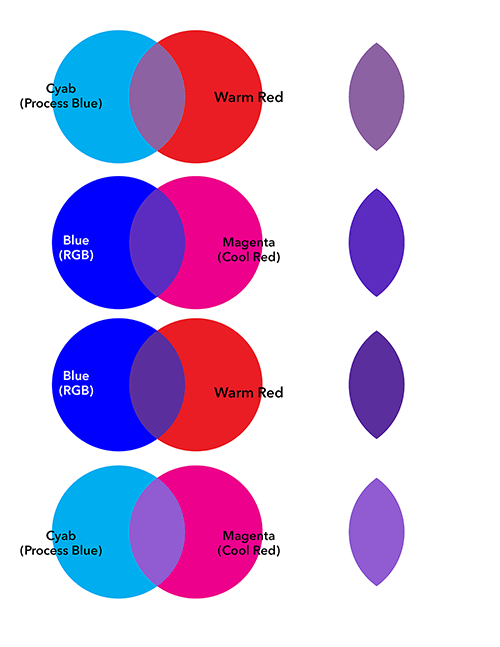
What Color Make Purple. Click on the time stamps below to jump to the section you're interested in0:00 red and blue makes brown and not purple0:37 use magenta and blue to mix purple. The important point to note is that the purple color is a combination of two major colors which are blue and red.
Color is a sense of sight that is based on electromagnetic spectrum. It isn't an intrinsic characteristic of matter but rather a phenomenon that is influenced by a variety of variables. This includes reflections of light, absorption, interference, and emission spectra.
Primary colorsThe history of primary colors spans a long time. Isaac Newton was one of the first to attempt to define the concept. Isaac Newton described sunlight as "primary colors." Another attempt was made by Hermann von Helmholtz. His suggestion was for a yellowish-green.
These are the three main primary colours. They are the three primary colors that are essential to human vision. Understanding the process that creates these colors is therefore important.
Mixing paints requires that you take into consideration the undertones. It is not a good idea to create an unattractive, muddy hue. The value and temperature of a primary color may be changed by adding white or black.
Secondary colorsSecondary colors are created by mixing a primary and an additional color. When you mix the primary colors with secondary colors, you can create infinite shades of one color.
The traditional color wheel can be useful when selecting the color scheme for your painting. Utilizing a color wheel, you can be sure that your paintings are attractive and balanced to the eye.
The secondary colors make a painting more impactful. This is especially true if you mix the secondary colors with the appropriate primary colors. This will result in a stunning work of art that viewers will be sure to appreciate.
Understanding color theory can help you design your perfect palette. It will also help you reduce time and costs. You will be able to pick the best secondary colors to your art.
Aristotle's theory on colorThe color theory developed by Aristotle is crucial to many science disciplines. Aristotle discusses the relationship between light and color in his book Colorology. He also discusses the history behind color and methods of coloring and relationships between color and other things.
According to Aristotle, color is a realisation of transparent matter. This implies that light can only paint a body. However, Aristotle argued that it is not necessary for the body to be colored. He asserts that a person's body isn't colorable when it is in a dark environment.
Aristotle's view of color is that it's a power to reflect light onto the eyes. It is not a myth, as certain philosophers of the seventeenth century may have believed.
Mixing additivesThere are many uses of mixing color additives including silk-screening printing televisions, and printing. In general, additive colour mixing uses primary colors (red-blue-or green) as the base and three to four spectral color light sources to create the desired colors.
A triad can be made when the color that results is mixed together with another color. This allows designers to create multiple color relations. For instance, a combination of green, red or blue colors , which results in a brown colour.
It's more intuitive to employ a triad than subtractive color mixing. The triad may also comprise diverse spectral lighting options and a mix model. The initial step in subtractive color mixing is to set two lights near to each other.
Newton's discovery about colorIsaac Newton's discovery of color was a significant event in the history of science. But, the specifics aren't quite as simple as they appear.
Newton, an academic at Cambridge University in England, spent a considerable amount of time studying the properties of light. He realized that light is composed of small particles. He carried out a series of experiments to study how these particles behaved.
He looked at rainbows and found that light is produced when it is passed through the prism. This rainbow is made up of various colours that are later refracted into white light.
The author also wrote a book on this topic, called the Book of Colours. The book outlined his theories about color.
Learning: The effects of colorA significant impact on performance and attention can be induced by color. Although it may not appear obvious at first glance but there is a clear connection. The color scheme used in an educational setting must be determined by the preferences of the learners.
A growing body of research is examining the effects of color in learning. The research has focused on various aspects of color, such as its ability to impact attention, mood, and retention.
Recent research has compared the performance of cognitive students in color and achromatic learning environments. These results demonstrate that color effects vary according to age and gender. In addition, more complex effects may occur when the colour is specific to the cognitive capabilities of the learner.
This will give you the perfect purple shade. You can also achieve a light violet by using 15% lime and 85% magenta. Purple color is made by mixing red and blue together.
These Purples Are Usually More Muted And Can.
The hallmark of interior design is the use of contrasting colors or. Purple and red make magenta, which is a monotone cousin to purple. Purple is made by combining red and blue light.
You Can Also Achieve A Light Violet By Using 15% Lime And 85% Magenta.
Adding just the right amount of the main yellow tone or even one of the many shades of yellow can help you change purple to a different tint. How to make purple colour by mixing two colours. You can choose any of the yellow colors to make your purple color as you want.
To Get The Purple Color, You Mix Two Primary Colors, Blue And Red.
Red and blue are essential for. Mixing the perfect purple color is not as simple as combining the. Dioxazine purple provence violet bluish
Click On The Time Stamps Below To Jump To The Section You're Interested In0:00 Red And Blue Makes Brown And Not Purple0:37 Use Magenta And Blue To Mix Purple.
Navigating the color bias to mix purple colors. The amount of red and blue color you use determines which shade of purple you will get after blending. 12 rows to make a purple color cooler, simply put in more blue color.
What Colors Make Dark Purple.
However, you need to consider. If you mix dioxagine purple with. Purple color is made by mixing red and blue together.