Opposite Color Of Green
Opposite Color Of Green. And you’ll know the opposite color of green according to each system. In the case of green, the primary color is green.
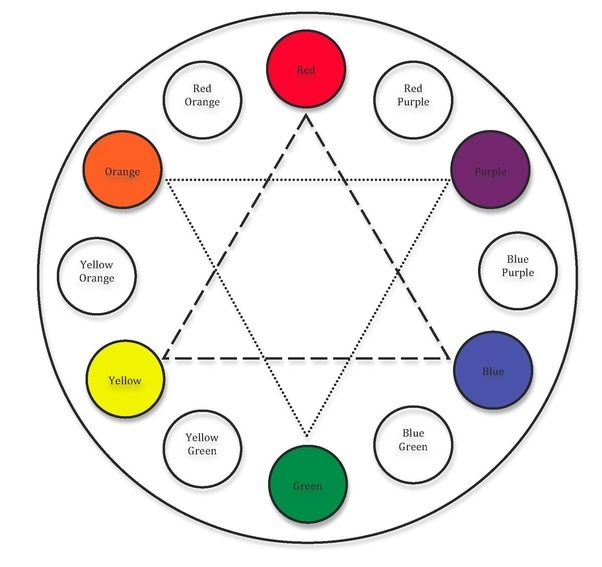
Color is a form of perception which utilizes the electromagnetic spectrum. It's not an intrinsic property, but rather a phenomenon that is altered by a range of elements. These factors are light reflection absorption of interference, and emission spectrums.
Primary colorsThere is a long history that explains the concept of primary colors. Isaac Newton was one of the first to attempt to define the concept. Isaac Newton described sunlight as a "primary colour." Another attempt was proposed by Hermann von Helmholtz. His suggestion was to create a yellowish-green.
Green, red, and blue are considered the three primary colors. These colors are vital for the human eye. This is why it is crucial to know the process of making colors.
Be sure to consider any undertones you mix into paints. You don't want to produce an unattractive, muddy hue. The color's temperature and quality can be affected by adding white to the primary color.
Secondary colorsSecondary colors are created when a primary hue is mixed with a complementary color. By mixing the appropriate primary colors and secondary colors it is possible to create endless shades of a specific color.
When choosing colors to paint using a traditional color wheel is a good idea. A color wheel can help ensure that your artwork is visually well-balanced.
Your painting can be enhanced with secondary colors. This is particularly true when you mix the secondary colors with the primary colors. It will produce a striking artwork that people will surely appreciate.
It will assist you to make the ideal color palette. This can save you time and money. For instance, you'll be able choose the most appropriate secondary colors for your painting.
The color theory of AristotleThe theory of color developed by Aristotle is an crucial to various science disciplines. Aristotle's book Colorology explores the connection between light, color, and various other aspects of our lives. He also discusses the origins, methods of coloring, and relationships between color and other things.
Aristotle says that color is an effect of matter that is transparent. That means the only way a body can be colored is when it is illuminated. Aristotle however, believed that a body could be colored even if it doesn't have to occur. A human body is not able to be colorized in a dark place, argues Aristotle.
Aristotle holds that color is a force which reflect light. This is easily understood when you understand Aristotle. It's not a phantasm as some seventeenth-century philosophers may think.
Additive mixingMany applications are available for mixing color including silkscreening, printing, and even televisions. The additive color mixture employs the primary colors (red and green or blue) for the base color. It is then combined with two or more spectral light sources to create the desired hue.
A trinity is formed when the color resulted is mixed with another colour. This allows designers to create different color relations. A red, green , and blue mixture can produce the brown color.
It can be more intuitive to utilize a triad rather instead of subtractive color mixing. It also involves different combinations of spectral and mixing models. It is essential to put two lights in close proximity prior to subtractive colors being mixed.
Newton's discovery on colorIsaac Newton's discovery about color is a milestone in the science and history of science. But the details aren't as simple as they appear.
Newton was an Englishman who studied at Cambridge University, spent much of his time studying the properties light. He found that light was made up of tiny particles. In order to determine the behavior of these particles, the researcher conducted a series experiments.
He looked at rainbows and found that light can be produced when it passes through the prism. This rainbow has a variety of shades that are refracted to produce white light.
He also wrote a complete book on the subject called The Book of Colours. He outlined his theories on color in it.
Learning effects of colorThe power of color can have a profound impact on the performance and attention of learners. Although it may not appear intuitive at first, there is a clear connection. The requirements of the student must determine the color scheme employed in an educational setting.
The research is expanding the effects of color on learning. These studies have examined various aspects that are related to color, including its ability and ability to affect emotion, attention, retention, and memory.
Recent research has examined the cognitive abilities of students in achromatic and color learning environments. These results suggest that there are some differences in the effects of color on genders and ages as well as that the effects are more complex. could occur when the colour is specifically tailored to the learners' cognitive abilities.
Showing paintbrush strokes and traces. In lamps and electronic illumination sources, the opposite of green is magenta. Contrast indicates a strong difference in color.
In Lamps And Electronic Illumination Sources, The Opposite Of Green Is Magenta.
On the rgb model, the opposite of red is cyan. Color that best contrast with dark green (hex #006400) is #ff9bff, nearest color name is pale magenta. Traditional color models list this as red as they are based.
These Bananas Are Green Now And Are Not Perfectly Ripe.
While they are contradictory, they usually go well together. Moreover, in cmyk, cyan is a subtractive primary color, which means that it begins on a white base and. Mixing any two colors that are complementary results in an.
To Answer The Question Directly, The Opposite Of Green Is Red.
She was sitting on the. In color theory, red and blue are considered “complimentary colors, not actually opposites except that each is found on opposite ends of the color spectrum. Color that best contrast with green (hex #00ff00) is #ff00ff, color name is magenta (web).
Green And Gold Are Synonymous With Glam, But If You're Hoping To Infuse A Little More Flavor Into That Classic Combo, Citron Is Your Best Bet.
The opposite of green, also known as the complement of green, is the color that has maximum contrast with green. Find out why that is, and other opposites of green. Green is a combination of yellow and blue, which makes sense, as red is a primary color.
The Tertiary Colors Are Chartreuse, As Green Leans Into Yellow, And Turquoise, As.
Its direct opposite is magenta on the rgb color wheel. Opposite colors, also known as complementary colors, are colors that have opposing wavelengths of light. This is a closeup from oil painting on linen canvas made with high quality artist paints and tools.