What Colors Make Dark Purple
What Colors Make Dark Purple. Dark purples are purple or violet colors that have been shaded with black. Most of us know what colors make purple paint but mixing red and blue doesn’t always give us the desired result.
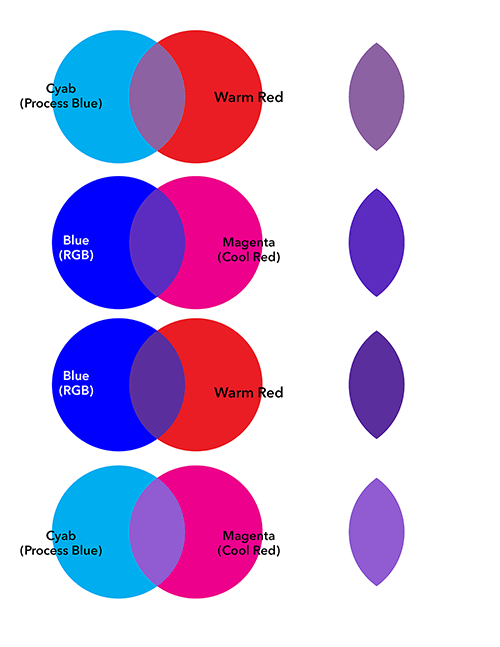
Color is a form of perception that uses the electromagnetic spectrum. It is not an inherent characteristic or property of the material. Instead, it is a phenomenon caused by several elements. These factors include the absorption, light reflection spectrums, interference, and emission of an object.
Primary colorsThere is a long and rich history behind the concept of primary colours. The first attempt to define the concept came from Isaac Newton. Isaac Newton called sunlight "primary shades." Hermann von Helmholtz tried again. His proposal was to use a yellowish hue.
They are the three primary principal colors. They are essential for our eyesight. Understanding how colors develop is vital.
Be sure to consider any undertones when mixing paints. You don't want to produce an unclean or dirty color. The addition of black or white to a primary color will alter the value and temperature of the color.
Secondary colorsSecondary colors can be made by mixing primary and secondary colors. Combining secondary and primary colors can create infinite shades.
An old-fashioned color wheel can help you choose the colors you would like to use for your painting. Utilizing a color wheel, you can ensure that your artwork is balanced and pleasing to the eyes.
The painting you are creating can be improved by mixing secondary colors. This is especially true if secondary colors are combined with primary colors. It will produce a striking work of art that viewers are sure to love.
Knowing the theory behind color will allow you to create your ideal color scheme. It will help you save money and time. It will help you choose the best secondary colors for your masterpiece.
Aristotle’s theory regarding colorThe theory of color developed by Aristotle is an important element in the evolution of many scientific disciplines. Aristotle analyzes the connection between light and color in his book Colorology. In addition, he explains the origins of colors, methods for coloring, as well as the relationships between objects and colors.
Aristotle believes that color is the reality of transparent matter. This means that light can only color a body. Aristotle claimed that the body does not require the dark space to have color. He argues that a person's body isn't colorable when it is in a dark environment.
Aristotle believed that color was a force that reflects light. This is how you can understand his thought. It's not a phantasm as some seventeenth-century philosophers may think.
Additive mixingThere are many uses for mixing colors like silk-screening, printing televisions, and printing. In general, additive color mixing uses primary colors (red blue, blue, or green) as the base, and two or more spectral colors to create the desired colors.
The resultant color can then be mixed with a different color to create the trinity. It allows designers to design different color relationships. For instance that a green, red and blue mixture creates a brown color.
A triad's use can be less intuitive than applying subtractive color mixing. You will also need to consider various combinations of spectral lights as well as a mix model. To create a subtractive color mix it is necessary to put two lights in close proximity to one another.
Newton's discoveries on colorIsaac Newton's discovery of the color of light can be observed is a landmark in the scientific history. It's not always as clear as they seem.
Newton, one of the students at Cambridge University (England), spent a significant amount of time studying the properties and applications of light. He realized that light is composed of microscopic particles. To find out how these particles behaved, He conducted a series of experiments.
He studied rainbows and realized that when light enters prisms, it produces the appearance of a rainbow. The rainbow is made up of many colors, which reflect back into white light.
He also wrote a book about the subject called The Book of Colours. He outlined his theories on color in the book.
Color effects on learningColor can have a profound impact on a learner's attention and performance. While this might not be obvious initially, there is a definite connection. The color scheme chosen for an educational setting must be determined by the preferences of the students.
There is a growing body of research examining the effects of color on learning. The studies have looked at various aspects that are related to the color of a room, such as its capacity and ability to affect emotion and attention, as well as retention and memory.
A recent study examined the effects of colour and achromatic learning environments on students' cognitive performance. These results suggest that there are different patterns in the effects of color on gender and age as well as that the effects are more complex. could occur when the colour is specifically tailored to learners their cognitive capabilities.
These purples are usually more muted and can. It is similar to cinnamon but with a more sandy tone to it. This is a practical definition that refers to the fact that violet and purple are perceived as the same.
This Color Looks Rich And Luxurious Alongside Dark.
As purple is a secondary color, the primary colors red and blue make purple when mixed together. And lilac, pink, and white are colors that go with light purple for a softer, delicate. The final product can be a soft purple like lavender or a gallant, dark purple like merlot.
Most Of Us Know What Colors Make Purple Paint But Mixing Red And Blue Doesn’t Always Give Us The Desired Result.
How to make purple colour by mixing two colours. These purples are usually more muted and can. It is similar to cinnamon but with a more sandy tone to it.
This Means That For Every Three Drops Of Blue, You Need To Mix In About 13.
Light shade of red and light shade of blue make a light purple. A better option for making dark purple is to use a small amount of burnt umber. Ratio for a dark purple color.
How To Make Purple Using Subtractive Mixing Unlike Additive Mixing, Subtractive.
Or, if you want to achieve a dark purple color, you need a blue: To create purple chocolate icing, gradually add small amounts of red and blue icing or coloring to chocolate icing until it reaches a purple color. Let’s try mixing cobalt blue and primary red!
This Can Be Done In Different Proportions To Create Different Shades Of Purple, From A Deep, Rich Hue To A Light Lavender Color.
Blue and red are essential to creating purple, but you can mix in other colors to create different shades of purple. This is a shade that combines yellow, orange, and brown. Dark purples are purple or violet colors that have been shaded with black.