What Colors Make A Dark Purple
What Colors Make A Dark Purple. Purple combines the intensity of the color red and the stability of. The most straightforward method to get a light purple shade is to add a tiny amount of white paint to your mix.
Color is a perception of color that is based on the electromagnetic spectrum. This is not an inherent property of matter. It is a process that can be influenced by many elements. The factors that influence it include reflection of light, absorption, interference and emission spectra of an object.
Primary colorsIt is well-known that primary colors have a long history. One of the first attempts at defining primary colors originated from Isaac Newton. Isaac Newton described sunlight in this way "Primary color." Hermann von Helmholtz also tried. His suggestion was to create a yellowish color.
They are the main essential colors. They are the three primary colors that are crucial to see. Understanding the process that creates these colors is therefore important.
Make sure to take into consideration any undertones when mixing paints. It's not a good idea to create an unclean or dirty color. The color's temperature as well as value can be affected by adding white to a primary color.
Secondary colorsSecondary colors are created by mixing primary and secondary colors. There are infinite shades of a color by mixing primary and secondary colors.
When choosing colors to paint, a traditional color wheel is helpful. The color wheel will ensure that your artwork is visually balanced.
Your painting can be enhanced with secondary colors. This is particularly true when you combine the secondary colors with primary ones. This will result in an amazing piece of art that people will love.
Knowing the theory behind color will help you create your perfect color scheme. It can help you save money and time. You can also select the best secondary colors for your artwork.
The color theory of AristotleThe color theory developed by Aristotle is vital to the growth of a variety of scientific disciplines. In his book Colorology, Aristotle explores the relationship between light and color. Alongside that, he discusses the origins of colors, techniques for coloring, as well as the relationships between objects and colors.
Aristotle says that color is an actuality in the world of transparent matter. A body is only colored when there is light. Aristotle however, believed that a body may be colored even though it is not required to happen. Aristotle argues that a human body will not be colored if it's in an unlit room.
One way to understand Aristotle's theory is that color is a force that transmits light to the eye. This isn't an illusion that some philosophers from the seventeenth century may have thought.
Additive mixingMany applications are available for mixing color including printing, silkscreening and TVs. In general, additive color mixing uses the primary colors (red-blue-or green) as the basis and three to four spectral color lights to produce desired hues.
A trinity is formed by the color that is mixed with a different color. This allows designers the ability to design a range of color relations. A mix of red and green creates a color called brown.
A triad is more difficult to grasp than subtractive colour mixing. It also involves a variety of combinations of light spectral, as well as mixing models. To subtractive color mix, it is necessary to put two lights close to each other.
Newton's discovery regarding colorIsaac Newton's discovery of color was a significant moment in the history of science. However, the details aren't as clear cut as they might seem.
Newton, an academic at Cambridge University (England), was a prolific researcher researching the properties and uses of light. He realized that light is comprised of tiny particles. He conducted a series of experiments to discover the behavior of these particles.
He researched rainbows and realized that light is produced by passing through a prism. This rainbow has a variety of colors which are then refracted back to white light.
He also wrote a book about the subject. It was named the Book of Colours. It outlined his theories on color.
Learning is affected by colorLearning is affected by the color. While it may not seem like there's an obvious connection, it's. The needs of learners in learning should guide the choice of color scheme in educational settings.
A growing body of research is examining the impact of color on learning. These studies focus on a variety of aspects of color, including its ability to affect emotions, attention and retention.
A recent study compared the effects of achromatic and color learning environments on students' cognitive performance. These findings show that color effects differ based on gender and age. Furthermore, more complex effects can occur when the colour is more specifically designed to enhance the cognitive abilities of the learner.
Colors to use with dark purple teal. Gold, copper, and yellow are colors that go with dark purple, imparting a regal ambiance. This explanation is valid if you mix the same amounts of all colors.
Shades Of Purple Tend To Pair Well With Yellow, Which Is Opposite On The Color Wheel.this Is Known As Complimentary Colors, And For Good Reason.
These purples are usually more muted and can. If your starting chocolate icing is very dark, you. The most straightforward method to get a light purple shade is to add a tiny amount of white paint to your mix.
Colors To Use With Dark Purple Teal.
Burnt umber is a dark. To create purple chocolate icing, gradually add small amounts of red and blue icing or coloring to chocolate icing until it reaches a purple color. A better option for making dark purple is to use a small amount of burnt umber.
Purple Combines The Intensity Of The Color Red And The Stability Of.
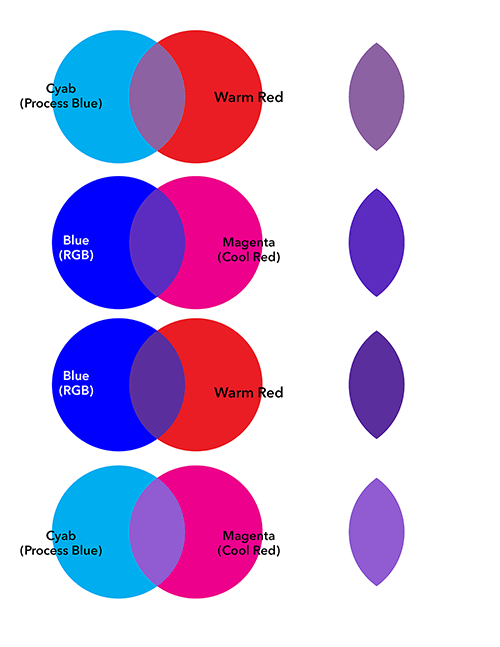
More red will create a redder purple, and more blue will create a bluer purple. The purple shade needed all depends on how complex your composition is, you might need to create. This can be done in different proportions to create different shades of purple, from a deep, rich hue to a light lavender color.
Adding White, Yellow, Or Gray To Your Mixture Of Blue And Red.
The final product can be a soft purple like lavender or a gallant, dark purple like merlot. Using black to make dark purple may result in unwanted tinges of color. Adding just the right amount of the main yellow tone or even one of the many shades of yellow can help you change purple to a different tint.
How To Make Purple Colour By Mixing Two Colours.
The darker tones of the purple will make the. Red and blue make the color purple, but for dark purple you would mix red and blue together and add a bit more blue than red to make it darker. How to make purple using subtractive mixing unlike additive mixing, subtractive.